Sunday, April 5, 2009
Balancing equations
If you would like to demonstrate 4.0 level knowledge for the Periodic Table you will need to know how to balance equations. If you still need help, this website is really good. It has really helpful practice problems at the bottom.


Wednesday, March 25, 2009
New Topic - Periodic Table
We have a new topic - the Periodic Table. For a list of what we're learning check the wiki. Here's a link to a website that has videos on each element. It's called the Periodic Table of Videos.
Monday, March 16, 2009
Trimester ends Friday!
This week is your last chance to bring up your scores for our three topics for this trimester. The three topics were Forces and Newton's Laws, Floating and Sinking, and Atoms.
If you wish to bring up your scores, the easiest thing to do is to check the document named trimester2summary.doc on the wiki page. It will list what standards you should learn to achieve certain scores. It also has a list of sample questions. It's never too late to earn the grade you want.
If you wish to bring up your scores, the easiest thing to do is to check the document named trimester2summary.doc on the wiki page. It will list what standards you should learn to achieve certain scores. It also has a list of sample questions. It's never too late to earn the grade you want.
Acids and bases
Your goal for this section is to be able to tell the difference between an acid and base. In class, we used pH paper to find the pH of different mystery liquids. From there, we matched the pH of the mystery liquids to the pH of known liquids, like vinegar and ammonia.


Thursday, March 5, 2009
All matter is made of atoms.
Sorry for the large gap between posts. Our school's web filter has decided to block blogging sites. It makes it difficult for me to publish the class content online.
We started a new topic on atoms. The big idea is that everything is made of atoms. We've been learning about the kinetic molecular theory. That's a fancy way of saying that atoms are always moving and bumping into each other. When those atoms are heated, they speed up. Since they're speeding up, they move farther apart. Heat them up really quickly and you get really fast expansion as you can see below.
The molecules of air in the film canister were rapidly heated and spread out quickly. This blew the film canister into the air.
Another implication of the KMT is that molecules bump into things and cause pressure. In this picture you see a balloon in a bell jar. The vacuum pump (not pictured) removes the air from the jar. The air inside the flask remains. It is still moving around and there's pressure inside the balloon. Since the pressure inside the balloon is greater, it expands. Remember when we learned how to calculate net force? Same idea. Since the pressure is greater on the inside, it expands until it reaches equilibrium.

That's it for now. Remember that the trimester ends in two weeks. If you are unhappy with your current grade, check your portfolio and find out what you still need to learn.
We started a new topic on atoms. The big idea is that everything is made of atoms. We've been learning about the kinetic molecular theory. That's a fancy way of saying that atoms are always moving and bumping into each other. When those atoms are heated, they speed up. Since they're speeding up, they move farther apart. Heat them up really quickly and you get really fast expansion as you can see below.
The molecules of air in the film canister were rapidly heated and spread out quickly. This blew the film canister into the air.
Another implication of the KMT is that molecules bump into things and cause pressure. In this picture you see a balloon in a bell jar. The vacuum pump (not pictured) removes the air from the jar. The air inside the flask remains. It is still moving around and there's pressure inside the balloon. Since the pressure inside the balloon is greater, it expands. Remember when we learned how to calculate net force? Same idea. Since the pressure is greater on the inside, it expands until it reaches equilibrium.

That's it for now. Remember that the trimester ends in two weeks. If you are unhappy with your current grade, check your portfolio and find out what you still need to learn.
Thursday, February 12, 2009
Forces concept map
Here's a link to the concept map I showed in class.
http://prezi.com/6634/
To zoom, just click. If you want to go back, hit spacebar. All of the things we've been learning about since November are linked to the basic concept of forces. Keep that in mind as forces will keep coming up again and again.
http://prezi.com/6634/
To zoom, just click. If you want to go back, hit spacebar. All of the things we've been learning about since November are linked to the basic concept of forces. Keep that in mind as forces will keep coming up again and again.
Thursday, February 5, 2009
Density and Buoyancy

Our unit on floating and sinking is coming to a close. Remember that in standards-based grading, your grade is based on your content knowledge. It is never too late to improve. To jog your memory, here are two recent activities we've done in class.
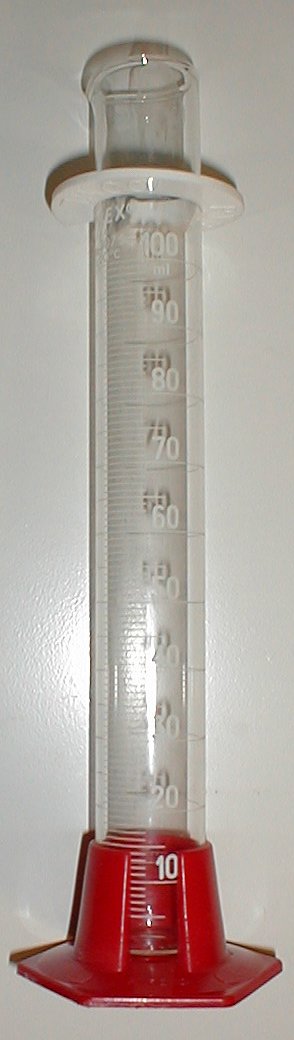
We built and sunk aluminum foil boats. In the first part, we built a small, medium, and large boat. Then we put pennies in them until they sunk. Using our triple beam balance and graduated cylinder, we found the mass and volume. Using the formula: density = mass/volume we were able to find the density.
In part two, our task was to design boats that would hold a minimum amount and then sink. For example, the first boat needed to hold 15 pennies and sink by the time it got to 20. By finding the mass of 15 pennies, we were able to predict the volume the boat would need to be. This time we built a boat using the formula: volume = length * width * height.
Today we created rainbow density columns. The goals was to create a liquid rainbow in a graduated cylinder using only food coloring, sugar, and water. The less dense liquids floated on top of the more dense ones. Here are some examples.


Subscribe to:
Posts (Atom)

 Posts
Posts